Watching and Waiting….a Proclamation!

For the past several weeks we have focused on our advent theme: “Watching and Waiting”. On Advent 1 we looked at the theme of “Watching and Waiting…in Desperation” as we heard the words of the prophet in Isaiah 64. For Advent 2, we considered the theme of “Watching and Waiting…in Preparation” as we looked at the message of John the Baptist. We especially considered the context of “wilderness” and looked at the biblical understanding of wilderneness – yes, a truly wild place, but a place where God meets his people and people meet God in a new way. For Advent 3, we looked at the theme of “Watching and Waiting – in Jubilation” and considered the advent theme of JOY; the text of the choir of angels announcing the birth of a savior to the shepherds at night. We were challenged to consider where such joy really comes from… and how to re-experience it this Christmas. Finally, today, we look at the theme of “Watching and Waiting… a Proclamation” and hope to gain some understanding through the proclamation that was made to Mary by the angel Gabriel. Is there any part of this proclamation that could be heard again by us today and applied to our own lives?

First, let’s take a look at the main points of Gabriel’s proclamation to Mary:

  • Don’t be afraid, you have found favor with God! The Lord is with you!
  • You will become pregnant and give birth to a son. You will name him Jesus.
  • He will be great and will be called the Son of the Most High. The Lord God will give him the throne of his father David, and he will reign over the house of Jacob forever; his kingdom will never end.
  • The Holy Spirit will come upon you, and the power of the Most High will overshadow you. So the holy one to be born will be called the Son of God. You will become pregnant, not by human biology but by a miracle of the Holy Spirit.
  • Even Elizabeth, your relative, who was said to be barren is in her 6th month of pregnancy.
  • Nothing is impossible for God.

As a final response to all of this Mary makes a proclamation of her own to Gabriel:

  • “I am the Lord’s servant. May it be to me as you have said.”

There is so much that could be said about this text – so many possible sermons! But this morning I want to take just three of the statements, three of the “proclamations” and claim them as our own.

THE 1ST PROCLAMATION FROM GABRIEL

1.     (V. 30)  “Do not be afraid (put your name here) for you have found favor with God.”

None of us are Mary – and our situations are completely different from hers. But God’s word to us at Christmas is the same. “Don’t be afraid. I love you. I have found favor with you.” Put your own name in there and hear God’s word to you. This is not the only text where God expresses his deep love and favor toward his children. In Isaiah 43:4 God speaks to the people of Israel – and to us – with these words:

“You are precious and honored in my sight, and I love you.” Isaiah 43:4

Mary’s acceptance of the angel’s proclamation of love, favor, and grace to her by God is amazing, considering the amount of personal difficulty and strain that such a proclamation would surely bring to her. Yet, she rejoiced. How do you feel about God’s great love and favor toward you today…. when you put your own name in that proclamation?

A 2ND PROCLAMATION FROM GABRIEL

2.   (v. 37)  “For nothing will be impossible with God.”

  • No, none of us are expecting to be pregnant through the Holy Spirit. Maybe Gabriel’s words to Mary seem like a bit of a stretch to us.
  • But, what are the areas in your life where you are struggling with faith.? Are you experiencing other kinds of difficulty and struggles that seem like there are no easy solutions? No way out?
  • I challenge you to consider this word of Gabriel and how it might relate to your own life and situation.

THE PROCLAMATION FROM MARY

3. (v. 38)  “Here I am. I am a servant of the Lord. Let it be to me according to your word.”

In her response to the angel – and to God – Mary displays a heart of submission. This may have been more difficult than hearing of God’s favor – or the fact that God is all-powerful. She needed at this point to place her entire life and future back in God’s hands and plans. Are we able to do the same?

Could these three proclamations change our lives today?

  1. Don’t be afraid. God loves you!
  2. Nothing is impossible for God. 
  3. Here I am. Let it be to me according to your word.  My life is yours!

Take these proclamations – these truths with you this week. Like Mary, ponder them in your hearts.

Dear Lord, thank you for the favor and love that you have shown me. Thank you that you are with me, even now, in this strange season of 2020. Thank you that no problem or anxiety I have is too great for you to deal with. Thank you that nothing is impossible for you! Today, I once again offer my life, my family, my plans, my entire future into your safekeeping. Amen.

Good News of Great Joy!

Luke 2:8-11

8In that region there were shepherds living in the fields, keeping watch over their flock by night. 
9Then an angel of the Lord stood before them, and the glory of the Lord shone around them, and they were terrified.   10But the angel said to them, “Do not be afraid; for see—I am bringing you good news of great joy for all the people:  11to you is born this day in the city of David a Savior, who is the Messiah, the Lord.

さて、この土地に、羊飼いたちが、野宿で夜番をしながら羊の群れを見守っていた。 すると、主の使いが彼らのところに来て、主の栄光が回りを照らしたので、彼らはひどく恐れた。 10 御使いは彼らに言った。「恐れることはありません。今、私はこの民全体のためのすばらしい喜びを知らせに来たのです。 11 きょうダビデの町で、あなたがたのために、救い主がお生まれになりました。この方こそ主キリストです。

The traditional themes for the four Sundays of Advent are – faithfulness; hope; joy; and love.  Today happens to be the 3rd Sunday of Advent, which means that I am to cover the topic of joy.

I first thought this was a bit ironic, since in these strange times, I was not having too much problem being faithful, hopeful or feeling the importance of love, but being joyful was not a frequent state in which I found myself.

From my perspective, as one who has been saved by God through the work of His Son on the cross, and having accepted Jesus Christ as my savior and lord, the only path I see for myself is to be faithful.  The Lord has revealed new ways to serve Him through the pandemic, using tools such as Zoom and YouTube, taking advantage of the wider reach we have compared to face-to-face. 

Seeing people come to know Christ, as well as seeing people growing spiritually through these media, it is easy for me to feel hopeful, even in these times. Plus, in difficult times, when so many things are out of our hands, the only thing we can really hang our hopes on is the Lord.

There are so much strife and obvious hate in our society now, it is also obvious that if we are going to make any impact for the Lord, it must be by love and not hate.  We must be able to manifest God’s love to others, regardless of how we feel.  We must act in love and in unity.

Now we go back to joy.  I think that in these times of pandemic and restrictions that we are under, many things that would normally give us joy have been suspended for now.  Getting together with our families who are not part of our household; dining out; going to the movies; meeting together for Sunday morning church services; going on a trip on an airplane.

At the same time, joy can often be very temporary.  The joy of a promotion into a new job can quickly dampen when you realize how much added responsibility and pressure there is and that you do not know what you are doing.  The joy of getting a new guitar can fade when you realize that although you can produce different kinds of sound, it does not improve your playing.  The joy of getting a larger, higher resolution TV wows you at the beginning, but soon that becomes the norm and no longer a source of joy.  The joy of getting a new car can fade over time as you get used to having it and the dents and the scratches start to accumulate.

What about things pertaining to our faith?  Did you feel great joy when you found out that the God of the universe loves you and sent His Son to die for you?  But did that excitement somewhat fade into the background as it became the norm?  What about the sense of joy that should be there when you get to worship God with other believers on Sunday mornings?  Did that also start to feel routine or even a little like a chore you must do?

Let us get back to this morning’s text.  The angel tells us that he is bringing us good news of great joy for all the people.  That includes us.  What is this news that is supposed to bring us great joy?  It is, “To you is born this day in the city of David a Savior, who is the Messiah, the Lord”.

The Jews have been waiting for 400 years to hear from God again, since Malachi.  Now not only the silence is broken, with it comes the great news that the Messiah has been born that day.  The one who will reign forever as king of Israel and will come to rule the world.

This would not be such a joyous thing for the non-Jews, but the angel tells us that this good news is for all the people, and not just the Jews.  God is going to make salvation and the cleansing of sins available to all the people, including us.

This is great news – a joy worthy news.  If salvation and eternal life is assured to us, then the big worry about what is going to happen to me after I die goes away.  Then I can start living life boldly for the Lord.  Also, this is available to all our loved ones, so they too can be assured of salvation and eternal life.

Again, the funny thing about joy is that once you possess something that gives you joy, you get used to it and it becomes the norm.  Now things that are worth much less than salvation and eternal life start to take some joy away.  Things like not being able to dine out or get together with friends and family for Christmas, etc.  In our heads and in our heart, we know we should be feeling great joy and appreciation that the Savior was born over 2000 years ago.  But sometimes it is hard to feel the joy.

How can we remedy this?  Because if non-believers keep running into non-joyous Christians, they are going to conclude that whatever Christ offers must not be much, since it is not bringing joy to these people.

We should focus on all the good things God has given us and appreciate them.  We should realize in our heads that the angel was right, and that we should be joyful for what happened that day in Bethlehem, and we should try to change our attitude to be more joyful, at least when we are around others.  We can choose how to act and how to respond – we can do it with the help of the Holy Spirit.  We as Christians can choose to act like joyful Christians, or not.  It is surprising how our outlook can turn positive if we let the Holy Spirit turn it in a positive direction.

Once we have accepted Jesus Christ as our Savior and Lord, we should be doing Kingdom work in appreciation for what God has freely given us.  Part of this work is to be previews of the Kingdom.  I am certain that eternity with the Lord and all His believers is going to be a joyful place.  Let’s let the not-yet Christians see that through us.

(The above is a summary of the message shared with us by Shun Takano, during our Sunday morning worship zoom session on December 13th)

Well Done…Faithful Servant!

Recently we received the following obituary and summary of the life of Philip Luttio, missionary and pastor – and father to Pastor Steve Luttio who served as our pastor here at the Japanese Congregational Church for over two decades. Please take a moment to read this inspiring summary and to take encouragement from the life of this humble servant. Our prayers are with Pastor Steve and Betty…

A Summary  of Philip Luttio’s Life

Philip Ray Luttio was born at the New Asbury Hospital in Minneapolis, MN on May 15, 1924 to his parents, Vaino and Lempi Luttio.  He was baptized in September 1924 and confirmed on May 8, 1938.  Phil and his 5 siblings grew up together in a lively musical household where he took up clarinet and became a very skilled musician. They lived on Penn Avenue and then later moved to Wayzata, MN.  The family joined Oak Knoll Lutheran Church in 1941.  Phil personally committed his life to the Lord at a summer camp the summer of 1942.  He graduated from Wayzata High School in June of 1943 and then enlisted in the army a month later.  He was severely wounded at Iwo Jima in March of 1945, awarded the Purple Heart, and was hospitalized for about a half year in Guam and Denver.  After discharge in October, he attended the Minneapolis LBI for two terms in the new year and transferred to Suomi College, attending from the fall of 1946 until the spring of 1948.  On June 30, 1948 he married Margaret Birkedal whom he had met at Oak Knoll Lutheran Church.  He then attended St Olaf College for one year, graduating in 1949.  The happy couple had 4 children, Karen born in 1949, Stephen born in 1951, Miriam born in 1954 and Mark born in 1958.

Phil attended Luther Seminary in St Paul, MN from September 1949 through May 1952.  Then Phil and Margaret sailed to Japan along with Karen and baby Steve in August 1952 to work as missionaries with the Lutheran church.  Phil worked with and pastored churches mainly between Tokyo and Nagoya: Tokiwadai,Tokyo 52-53, Omori 53-54, Yokosuka 54-55, Handa 55-58, Shimada 59-64, MN furlough 64-65, Tokyo 65-67 (65-66 they were dorm parents for missionary kids while Phil took Japanese classes at ICU and 66-67 was spent at the Todai Student Center at Tokyo University).  They worked in Nagoya from 1967-1970 and then returned to Tokyo where Phil worked from 1971-1982 with Rev. Kojima at a church where half of the members were deaf.  Phil’s last assignment in Japan was in Toyohashi from 1982-1989. 

Phil’s musical and artistic talents were invaluable tools in his evangelistic ministry.  Phil directed his family band and choir made up of Phil, Margaret, and the four children from the time they were young. During their 1970-1971 furlough year, they made a professional recording and traveled about 10,000 miles around the perimeter of the United States performing at churches, colleges and even Madison Square Garden.  They returned to Japan to do music evangelism throughout all Japan as well.

Upon retirement, after 37 years of ministry in Japan, Phil and Margaret settled in San Pedro, CA where they lived for 31 years.  He continued to play clarinet with Margaret on piano and enjoyed painting and wood carving. They also enjoyed ministering and traveling all over the world and spending lots of quality time with their children and growing grandchildren.  For their last 10 years there, they received extensive care from their daughter Miriam with help from their granddaughter Kristina.  In August of 2020 they moved to Roseville, MN to live in the home of their daughter Karen and her husband Paul, receiving care from them, their daughter Naomi, and Phil’s son Steve.  Surrounded by the songs and sounds of his beloved family, Phil’s chariot came to carry him home on December 7, 2020, at age 96.  He is survived by his beloved wife, Margaret, his sister, Joanna Monson, his four children Karen Anderson (Paul), Stephen Luttio (Elizabeth. Blaine, MN), Miriam Varvais (Tim. Rancho Palos Verdes, CA) , and Mark Luttio (Shirley. Boca Raton, FL).  He also is fondly remembered by his 14 grandchildren* and 27 great grandchildren along with many nieces and nephews. 

We are thankful for the life and legacy of this faithful, godly man.

Memorial gifts can be given to the Christian ministry of your choice.

*Andrew Anderson, Naomi Anderson, Gabriel Anderson, Erikka Shepp, Israel Anderson, Karis Alex; Rachel Wolff, Sara Johnstone, Rebecca Luttio; Kristina Varvais; Jacob Luttio, Marcia Pistotti, Isaac Luttio, Melissa Campbell.

Watching and Waiting…in Preparation

Mark 1:1-8

For today, the second Sunday in the Advent season, we continue our theme of “watching and waiting…”. We began our Advent season last week with “watching and waiting… in desperation” and today we turn to “watching and waiting… in preparation.”

What, exactly, should we be doing to prepare for the birth of Jesus Christ? Of course, at Christmas, we not only celebrate the historic birth of a Savior, but the present re-birth of that Lordship in our lives today, as well as the future coming of the King.

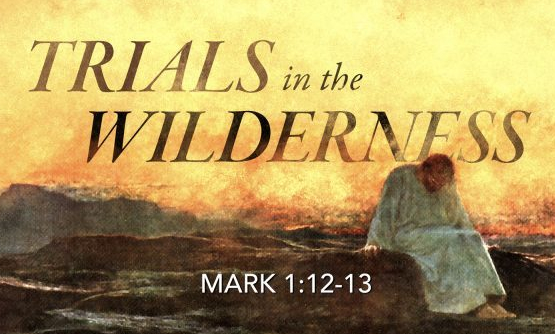
Our texts, both Old Testament (Isaiah 40:1-11) and New Testament (Mark 1:1-8) bring images of the wilderness… and a voice of a prophet crying out for all to prepare. “A voice of one crying in the wilderness – ‘Prepare the way of the Lord!'”. The prophet here is John the Baptist, a rough wilderness survivor, clothed in a garment woven from camel’s hair, with a leather belt, and living off of locusts and wild honey. He is shown as a forerunner. He is proclaiming the imminent arrival of one far greater than himself. The arrival of this Messiah demands preparation – and that involves heart preparation. He is calling people out to the desert in order to be baptized in water as a symbol of one’s confession of sin.

While there are many different possible angles to focus on in this brief text, I wish to look together at the image of “wilderness” in order to give us a hint as to our own necessary advent preparation.

Biblical wilderness

  • In scripture the wilderness is quite literally a “wild” place – maybe not the kind of wilderness that we sometimes imagine (a beautiful national park where one can enjoy camping and hiking?)
  • It is a brutal, difficult environment where survival itself is almost impossible.
  • In scripture, the wilderness is usually NOT a place one would choose to go.
  • In the Bible, either you end up there because of your own sin and mistakes.. or you’re led there in order to receive training of some kind. Examples abound… the people of Israel wandering in the wilderness for 40 years; Jesus fasting and praying for 40 days prior to his public ministry.
  • Yet, in scripture the wilderness is also where God meets people. Where people meet God. God leads the Israelites through Moses in the wilderness. Jesus prays and fasts, and in the end experiences tempting and victory in the wilderness. Jesus’ baptism concludes with the Holy Spirit descending on Him in the form of a dove. God meets and saves Hagar (and Ishmael) in the wilderness when they were all but lost.

Why is this important for us?

  1. The wilderness exposes our complete helplessness and powerlessness. Without help from outside – we perish.
  2. The wilderness forces us to focus…and return to basics; away from the city and all of its busy-ness, conveniences, and distractions. In this brutal environment we have a better chance of becoming quiet and focused – of considering our own lives. Pride and arrogance give way to humility and openness.  John the Baptist called people out from Jerusalem and they came out to the desert – where he baptized them; a water baptism of repentance for the forgiveness of sins.
  3. Biblically, the wilderness represents a place where we meet God. Helplessness, focus, humility, and repentance; all leading to a work of the Holy Spirit in our lives. From adversity…comes comfort and spiritual awakening.

How can this help us?

  • Many of us feel that we have been wandering in a kind of wasteland – a wilderness for the past 10 months.
  • 10 months of pandemic have left many without work, without hope, without health. 2020 has been a year of pandemic racism as well as COVID. We are politically divided as a country and we don’t seem to know which direction we are heading.
  • For some the result is anxiety – for others – depression.
  • The list of difficulties and stresses goes on and on…

But is it possible during Advent 2020 – that we could embrace this wilderness that we are experiencing? I don’t mean to be happy about all that’s gone on – but I do mean to more fully accept it as our present journey, one that is vitally important for our own lives and hearts. We certainly did not choose all the outcomes of this year. We didn’t ask for this wilderness. But can we at least recognize the following?

  • We, too, sense our own helplessness and powerlessness. And that’s a good thing. Without help from someone – we too will perish. Of course we seek a vaccine, and perhaps even financial assistance from the government. But we also seek a Savior – a messiah.
  • These difficult times cause us to focus on what is truly important – to consider some heart preparation, some repentance – to take a hard look at ourselves. We can get rid of arrogance and pride, and seek a more humble heart. John’s message to repent and be baptized is still valid.
  • And finally, can we truly expect to meet God in a new way in this wilderness? God has not left us. The Holy Spirit is still leading us. What new things can we expect? Will there be light at the end of this tunnel?

And so we watch and wait in preparation:

  • We prepare by embracing the wilderness we are experiencing
  • We prepare by humbling our hearts and confessing our sins
  • We prepare by expecting a work of the Holy Spirit in our lives.

COME, LORD JESUS!

(the above is a summary of our message shared during our zoom worship session on December 6, 2020.)

Watching and Waiting…in Desperation

Since ancient times no one has heard, no ear has perceived, no eye has seen any God besides you, who acts on behalf of those who wait for him. Isaiah 64:4

Today begins Advent. It is a time of preparation – preparation for celebrating the birth of a Savior. But it’s not usually (at least in the Bible) a time of peaceful and quiet preparation. It involves desperation…. and waiting….and darkness…..and more waiting.

Have you ever felt desperate? I mean, ….. really desperate? have you ever felt the stress of your own helplessness while waiting for some result or report? Have you ever paced the halls of a hospital during a surgery…. waiting for a report of the outcome from a doctor? Have you ever wondered how you’ll be able to pay your bills this month?

Our text today in Isaiah 64:1-9 is a prayer – a lament in which the prophet cries out to God in frustration and desperation. Here is a brief summary of that prayer and cry for help:

Come Down and Do Something! (verses 1-4)

The prophet cries out – “Please come down and DO something! Make your name known among all people. You’ve worked miraculously on our behalf many times in the past! Please do it again NOW. You’ve promised to do this on behalf of those who wait for you.”

We Need Forgiveness and Healing (verses 5-7)

The prophet’s prayer changes as he considers the peoples’ complicity in their desperate situation. “You’ve taught us the right path to walk – but we haven’t been able to follow that road. You were angry with us when we sinned. Even when we try to be good and righteousness – it all just adds up to filthy rags. No one calls on you anymore for help or guidance. We can see that we are part of the problem. We are complicit in the present state of affairs.”

Look Upon Us. We’re Watching and Waiting for You (verses 8-9)

The prayer concludes with a reminder and final plea: “Yet, You are our Father! We’re the clay and You’re the potter. Mold us anew into what you would have us be! Don’t forget us. Remember that we are your people – your loved children!”

So we’re waiting in the dark…in desperation. Maybe we can’t sleep. Maybe our child is sick. For you, what is the darkness you feel at this season? Loneliness? A broken relationship? A depression that you can’t make go away? A financial crisis? A virus that has disrupted our entire society? A nation that is completely polarized politically?

Perhaps we could try the posture of Isaiah today:

  • Pray earnestly, asking God to Come Down and Do Something!
  • Realize that we, too, are part of the problem. We have sinned. We don’t deserve God’s salvation. We need healing and forgiveness.
  • Remind God that we are His. Look upon us. We’re waiting for you.

As we sit in darkness, and maybe even experience desperation… we know that the light is coming. The light of the world that will turn our darkness and desperation into new light and hope. “Lord, help us to believe that you will work on our behalf…”

A Time to Give Thanks…

As I write this brief greeting to all of you, my JCC family, we are finishing an unusual day of Thanksgiving. We were fortunate enough to have our children from Seattle join us today for a fun thanksgiving dinner outside on the deck, along with a slight drizzle of rain half-way through our meal. While our table and food were a bit dampened, our spirits were not.

We wish to all of our JCC family a happy Thanksgiving, even as we know that this pandemic has brought much worry, anxiety, and hardship for many. I offer this brief sentence that I read in a devotional this morning for your consideration:

An attitude of

CONTENTMENT

turns everything into a

Gift!

May we be reminded this Thanksgiving of the great gift of eternal life through Jesus, our Lord!

Pastor Tim

The Surrounding Support of the Lord

Psalm 125:1-2

Those who trust in the LORD are like Mount Zion, which cannot be shaken but endures forever. As the mountains surround Jerusalem, so the LORD surrounds his people both now and forevermore.

詩篇 125:1-2

主に信頼する人々はシオンの山のようだ。ゆるぐことなく、とこしえにながらえる。山々がエルサレムを取り囲むように、主は御民を今よりとこしえまでも囲まれる。

In the Fall of 1984 I was able to take a 3-week trek around the Annapurna mountains, part of the larger Himalaya Mountain Range that extends east and west along the Nepal and China border. My route was a large counter-clockwise circle beginning at around 3,000 ft. altitude in the town of Dumre, climbing to the Tharong-La pass at 17,769 ft., and then hiking back down a different river valley, finally ending in the city of Pokhara. Within that circle are 6 peaks, all over 7,000 meters and many more that are over 6,000 meters. The views were spectacular and the trek… life-changing. Being surrounded by these massive mountains was truly an amazing experience.

Here, I’m taking the photo from the north, looking down on the others who were crossing the Tharong La with me. We’re trekking from left to right, now heading down into a completely different river valley. This was about 7:30 a.m., after about 4 hours of climbing (we left our camp in Pedi at about 3:00 a.m.). The date was November 15th and we are right about at snowline. Towering up on each side of us are peaks that are over 7,000 meters (22,000 to 24,000 ft.). The picture below is shot from the pass with a longer lense.

Even when the mountains are not as high as the Himalayan peaks, being surrounded by mountains is not an uncommon experience in many countries. For over 20 years we lived in Gunma, a prefecture in Japan with 12 cities on the flatlands, and 50 towns and villages located in several large mountains that surround the prefecture. Mt. Akagi, Mt. Haruna, Mt. Asama, and Mt. Myogi were just the main four peaks that were part of our daily lives.

The two photos below show Mt. Tanigawa (one of our highest peaks in Gunma) and Mt. Akagi, as it appears to most folks living down in the capital city of Maebashi during the summer season.

Psalm 125, our text for today, is referred to as a “Song of Ascents”. It was thought to be a song or chant that may have been sung by pilgrims as they climbed the road to the capital, Jerusalem, for one of the major festivals that took place there each year. Jerusalem is located on Mt. Zion, higher than the towns and river valleys below. Mt. Zion, in turn, is surrounded by mountains. While these are not mountains on the scale of the Annapurna range I mentioned earlier, the words sung here in verses 1 and 2 must have been deeply meaningful to the pilgrims as they walked along, aware of the mountains and geography surrounding them.

The poet gives us a beautiful word image – actually 2 images.

  1. In verse one, we see ourselves described as a mountain – like Mt. Zion – when we are able to place our trust fully in God. “Those who trust in the LORD are like Mount Zion, which cannot be shaken but endures forever.”
  • Those who TRUST in the Lord – we can’t really do this unless we remove our trust in other things.
  • …are like Mount Zion – the mount / rock on which Jerusalem stands; this would have been impressive for pilgrims to see and contemplate.

Scripture uses other word pictures to describe people:

  • Some people are like sand, ever shifting and unstable  (Mt. 7:26)
  • Some people are like the sea, restless and unsettled  (Is 57:20; James 1:6)
  • Some people are like the wind, uncertain and inconsistent (Eph 4:14)
  • But believers who trust in the Lord are like a mountain – strong, stable, secure

2. In verse 2 the image switches from us to God – God, as a surrounding and protecting range of mountains

“As the mountains surround Jerusalem, so the Lord surrounds His people.”

  • Again, pilgrims would have been impressed at the reality of the geography as they made their ascent to Jerusalem.
  • To have God pictured as mountains that surround us (we too are like a mountain) would be a very comforting and supporting image.

Let’s take these two images with us as we head into the week – Ourselves as mountains, and God as a surrounding protection of mountains. But let’s not forget. The key to these images is TRUST!

(The above is a summary of our message from November 15th shared during our zoom worship time. It was a thrill to have Pastors Steve and Betty Luttio join us from Minnesota…. and to sing for us a song based exactly on these two verses! A song that they have been singing since their college days.)

Live in Love

Ephesians 4:29-5:2

29Let no evil talk come out of your mouths, but only what is useful for building up, as there is need, so that your words may give grace to those who hear. 30And do not grieve the Holy Spirit of God, with which you were marked with a seal for the day of redemption. 31Put away from you all bitterness and wrath and anger and wrangling and slander, together with all malice, 32and be kind to one another, tenderhearted, forgiving one another, as God in Christ has forgiven you. 
5:1 Therefore be imitators of God, as beloved children, 5:2 and live in love, as Christ loved us and gave himself up for us, a fragrant offering and sacrifice to God.

29 悪いことばを、いっさい口から出してはいけません。ただ、必要なとき、人の徳を養うのに役立つことばを話し、聞く人に恵みを与えなさい。 30 神の聖霊を悲しませてはいけません。あなたがたは、贖いの日のために、聖霊によって証印を押されているのです。 31 無慈悲、憤り、怒り、叫び、そしりなどを、いっさいの悪意とともに、みな捨て去りなさい。 32 お互いに親切にし、心の優しい人となり、神がキリストにおいてあなたがたを赦してくださったように、互いに赦し合いなさい。ですから、愛されている子どもらしく、神にならう者となりなさい。 また、愛のうちに歩みなさい。キリストもあなたがたを愛して、私たちのために、ご自身を神へのささげ物、また供え物とし、香ばしいかおりをおささげになりました。

Earlier in Ephesians, Paul talks about faith of the individual.  Then he turns to how the believers, both Jews and Gentiles need to become one in Christ.  He then reminds us that we now have been given new life and we need to leave the old one behind.  And in this section, he gives us some rules for the new life.

He tells us to let no evil talk come out of our mouths, but only what is useful for building up.  Our words are to give grace to those who hear.  We are not to grieve the Holy Spirit.

He gives us six unpleasant attitudes and actions that we are to put away:

  1. Bitterness – Bitter or sour spirit, bitter or sour speech
  2. Wrath – Passionate rage, strong vengeful anger
  3. Anger – A strong feeling of displeasure of antagonism, settled and sullen hostility
  4. Wrangling – To dispute angrily
  5. Slander – Speaking evil of others, especially behind their backs, defaming and destroying their reputation
  6. Malice – Ill will, wishing and plotting evil against people

He also gives us six qualities which we are to manifest and actions to take:

  1. Be kind to one another – Kindness towards even the ungrateful and the selfish
  2. Be tenderhearted — Compassionate
  3. Forgiving one another – Acting in grace towards one another, as God in Christ has acted in grace towards us
  4. Imitators of God, as beloved children – As children copy their parents, so we are to copy God
  5. Live in love as Christ loved us – Self-giving for others
  6. Fragrant offering and sacrifice to God – Sacrificial love for others becomes a sacrifice acceptable to God

The 2020 election for the U.S. presidency has been a contentious one. Seems like Joe Biden has the necessary votes to become the 46th president of the United States.  But it seems that we are not quite done with this election.  And even after the election is well behind us, the pandemic and the divided country will still be here.

When I log onto Facebook, I see many accusations, gloating, whining, despair, and re-posting of questionable “facts” from both sides of the political divide, even among Christians.  If one has strong feelings on this, it is very tempting to join in on the fray.  Before we do so, however, especially if we are followers of Christ, we should look at what Paul has written here.

We have been made new creatures through our faith in Christ, and now we have new rules to live by – Whether in person, via a phone call, email, or postings on social media.

No evil comments – only comments that are useful for building up the others’ faith.  Only words that give grace to those who hear.  Nothing that would grieve the Holy Spirit should come forth from us.

We are to live in love as Christ loved us and gave Himself up for us.

Let us keep these verses handy as a reminder.  If each Christian would live according to these words, we could truly act as the preview of the Kingdom to come. 

(the above is a summary of the message shared with us by Shun Takano during our zoom worship session on November 8, 2020.)

The Upside Down Kingdom

A look at the Beatitudes – All Saints Day

Now when Jesus saw the crowds, he went up on a mountainside and sat down. His disciples came to him, and he began to teach them. He said:

“Blessed are the poor in spirit,
    for theirs is the kingdom of heaven.
Blessed are those who mourn,
    for they will be comforted.
Blessed are the meek,
    for they will inherit the earth.
Blessed are those who hunger and thirst for righteousness,
    for they will be filled.
Blessed are the merciful,
    for they will be shown mercy.
Blessed are the pure in heart,
    for they will see God.
Blessed are the peacemakers,
    for they will be called children of God.
10 Blessed are those who are persecuted because of righteousness,
    for theirs is the kingdom of heaven.

11 “Blessed are you when people insult you, persecute you and falsely say all kinds of evil against you because of me. 12 Rejoice and be glad, because great is your reward in heaven, for in the same way they persecuted the prophets who were before you.

I don’t remember the first time that I read these words, or had them read to me. But I know that I have heard them since I was a small child. As with many other teachings from the Sermon on the Mount (Matthew 5-7) I was both amazed at their beauty and truth – as well as aware that they somehow seemed to represent a world that was completely different than the one I inhabited. Almost upside down.

While Jesus’ words seemed poetic, and somehow powerful (even as a child I could sense that….) they also seemed unrealistic, naïve, and simply wrong about their predicted outcomes.

“Nice guys finish last” seemed more accurately to describe the world I saw around me than “blessed are the meek – for they will inherit the earth”. I liked Jesus’ words better – but they didn’t seem very true.

As a seventh grader living in Minneapolis in 1968 for a year – only my second year living outside of Japan – I attended Bryant Junior High, a public school that was, at the time, 70% African American. I began to understand and think about race issues for the first time. It was a year when Malcolm X, Martin Luther King Jr. and Bobby Kennedy were all killed. My school of mostly black students was affected no less than other schools or parts of American society. Jesus words about those that “hungered after righteousness and justice” somehow didn’t seem to include all of the chaos felt that year. For many African Americans – both in 1968, and today in 2020 – a hungering after racial justice may put you in prison, or even bring about your death. What did Jesus mean… that they would be filled?

Or even today, I find myself asking…. Am I hungry for righteousness? I have to admit that in some ways my life is so easy that I’m not really hungry for much of anything. My desire for God is even amazingly small and weak at times – not because I’ve lost faith…. but simply because I’m so “filled” with blessings in other ways. Is it possible that my level of comfort and amount of blessings can at times even blind me to the fact that I would be completely helpless without God’s grace in my life?

So all of this points to the fact that for me – the Beatitudes describes a kingdom – one which has arrived, but also one that is not yet completely here.

  • The beatitudes are not a list of laws – “thou shalt” or “thou shalt not…”
  • They are not a series of suggestions to us of how to live…
  • Jesus simply describes the truth of “how things are” in the kingdom of heaven.

Jesus says that those who are poor in spirit, mourn, hunger and thirst after righteousness, and are meek – are blessed and favored by God. They will be comforted, filled, and inherit the earth. Also, those that are merciful, pure in heart, those that work for peace, and those that are persecuted – are also blessed in the kingdom of God and will be rewarded by being treated mercifully, seeing God, being called “children of God” and receiving a great reward in heaven.

If this is a kingdom that is both here and yet not completely here…. How can we see signs of it? Where can we look to see it’s validity today?

Today is All Saints Day (or all souls day) in the Christian calendar. We remember those that have gone before us; saints that have already given their lives and received their rewards. We thank God for those who have been examples to us in our faith, both from the Bible and from our own histories. And so I suggest to you this morning that we can see the beatitudes – this upside down kingdom – lived out in at least 2 arenas: in the life of Jesus himself, and in the lives of those saints who have gone before us.

1. We  see this upside down kingdom fulfilled in Jesus himself. In his life, death, and resurrection, we can see the validity of every one of the beatitudes. Below is a quote from Professor Lance Pape:

“And so, for now at least, we do not yet see all these things, “but we do see Jesus” (Hebrews 2:9). Jesus not only declares, but embodies this new world. An old poem promises that a day is coming when every knee will bow and every tongue confess that a crucified man is Lord (Philippians 2:10-11). Everyone will see at last that the one hung upon a tree in shame, the one who in poverty of spirit was forsaken by everyone — even by God in the end, it seemed — the last of the last, is first, is Lord of all. Every tongue will admit that the man of sorrows, the mourner, is comforted at last in the power of resurrection.

Every tongue will confess that the meek lamb who did not open his mouth before the slaughterers has been granted the earth and everything in it (Matthew 28:18). Every tongue will confess that the one who longed for justice has lived to see justice; that the one who practiced purity of heart is standing in the presence of God; that the great peacemaker is now called the Son of God. On that day every tongue will confess that the one who was persecuted for the sake of righteousness (verse 10) is indeed Blessed of God.”

2. Can we also see the validity of this upside down kingdom in the lives of the saints? Think back on those in your life who have been the saints – who have led you to faith…. who have encouraged you in your faith? Do any of the characteristics described in the Beatitudes shine forth in their lives?

“Lord, help us to live lives that embody your words in these beatitudes. Although your values seem so different than those of the world around us, help us to believe in the truth of your kingdom, and to seek to live those values in our own lives – with your help and through your grace. Amen.”

(The above is a summary of the message shared on Sunday, Nov. 1st, during our zoom worship session.)

To Caesar…or to God?

Then the Pharisees went out and laid plans to trap him in his words. They sent their disciples to him along with the Herodians. “Teacher,” they said, “we know you are a man of integrity and that you teach the way of God in accordance with the truth. You aren’t swayed by men, because you pay no attention to who they are. Tell us then, what is your opinion? Is it right to pay taxes to Caesar or not?” But Jesus, knowing their evil intent, said, “You hypocrites, why are you trying to trap me? Show me the coin used for paying the tax.” They brought him a denarius, and he asked them, “Whose portrait is this? And whose inscription?” “Caesar’s,” they replied. Then he said to them, “Give to Caesar what is Caesar’s, and to God what is God’s.” When they heard this, they were amazed. So they left him and went away. Matthew 22:15-22

Our text today involves a trick question.

The Pharisees were “anti-tax” since it represented worshiping a “false god”.  The Herodians supposedly gained their access to power through Rome, and so viewed being “anti-tax” as treason. Here, the opposing political parties team up to trick Jesus.

But Jesus challenges them back. “You hypocrites… Why are you trying to trick me? Give to Caesar what is Caesar’s. Give to God what belongs to God.”

What does Jesus mean by this?  It appears to be a question of loyalty and allegiance – to either a government / political system…. or to God. To whom should you give your ultimate allegiance?

  • Is Jesus saying “there should be no loyalty or allegiance to Caesar – only to God?”
  • Or, is he saying that while we owe SOME things to Caesar – like taxes – we owe everything to God?

Many commentators point out that the opening words in Genesis were probably part of the understanding of Jesus’ words by those who heard them. While Caesar had his own “likeness” and “image”  put on the Roman coin, God has imprinted his likeness and image on humanity.

Genesis 1:26 – Then God said, “Let us make humans in our image, in our likeness

So the coin may have Caesar’s image on it – but we have God’s image on us! Figuring out our taxes may actually be the easy part. What we owe God is usually the harder issue to understand.

In our nation today, we are polarized. We are unable to hear each other. We’ve stopped being able to discuss difficult topics without slipping into name-calling and cynicism. We are less than 3 weeks out from a major election. In our politics today, Christian brothers and sisters often disagree heatedly on what our position should be in regard to any number of issues. In today’s biblical passage the issue was taxation. For us today it may be immigration, health care, abortion, racism, sexual gender issues, or any number of other issues. We are polarized, numbed, cynical, frustrated. How are we to behave? What do Jesus’ words have to say to us in our present climate?

Last week Shun Takano shared with us a message from I Corinthians 13 on the topic of LOVE. As Shun stated, if we don’t have love – we have nothing. Even a “correct opinion” is worthless if we have forgotten that love is our true identifier – not our political party. Shun pointed out that in Jesus’ day one of the hot topics was the identity of the long-awaited messiah – was Jesus this promised Messiah, or not? In the end, Jesus didn’t discriminate between those who loved him and believed him to be the Messiah, and those that didn’t. He simply showed his sacrificial love for all by dying for both sides.

During these turbulent days I would like to suggest that the challenge to us is to offer respect, love, mercy (all qualities of God that we are to mimic) to all those around us – even those who hold a completely different political opinion than we do. Our “chief identifying feature” is not which candidate we will vote for – but the love we show for each other. Not, are you Republican or Democrat, but are you aware that you’re made in the image of God – and are expected to behave like it?

There is NO political end that allows you to bypass Christ-like behavior, i.e., treating others with love and respect – as brothers and sisters, created by God our heavenly Father. This is, of course, far trickier than it sounds, particularly when the issues being discussed and the opinions held are life and death matters.

Jesus may have said to his questioners: “It doesn’t matter whether you are a Pharisee or a Herodian – whether you think taxes are payable according to Jewish law or not. The bigger question is this: “Are you aware that everything – yourself included – belongs to God? How do you understand your civic duties in light of this?”

Politics will come and go… Caesars will rise and fall – but the Kingdom of God is eternal. In light of this Paul says the following to the Christians in Rome:

“Offer your bodies as a living sacrifice, holy and pleasing to God–this is your spiritual act of worship.” Romans 12:1

As a friend and member of JCC, would you walk with me this coming week in struggling with this very real issue: understanding our civic duties and political involvement – in light of the fact that we are imprinted with the very likeness of God? Finding that balance won’t be easy, but the struggle and prayer work is always worth it.

(the above is a summary of the message shared during our zoom worship hour last Sunday, October 18th.)