Divine Things, and Human Things

Matthew 16:21-28 / マタイ16:21−28

In today’s text, Jesus begins to speak clearly about his final days. Until now, he has taught, ministered, healed, and announced the presence of the kingdom of heaven. Now he speaks about his coming death and suffering in Jerusalem.

It must have been a shock to the disciples who had experienced all of his successes, miracles, and gathering of the crowds. The disciples were looking forward to more victory, possibly even a political victory of Israel regaining control over her captor, Rome. Jesus, was, after all – the Messiah! Peter’s words to Jesus make good sense and I would probably have said the same thing if I were there. “Lord, this can’t be!”

Jesus’ response seems harsh – the words are said to Peter but actually directed at Satan. “Get behind me Satan!” It’s clear that what Peter has said – in other words staying safe, riding the popularity wave, continuing to thrive – rather than to die on a cross, were a REAL temptation for Jesus. It would have been much easier to avoid a criminal death.  Jesus clearly labels the easy route of safety and self-preservation as “human things” or “things of men”.

“You do not have in mind the things of God (divine things), but merely human things.” あなたは神のことを思わないで、人のことを思っている。」

Perhaps those human things could include the following: safety, staying alive, political overthrow, success, comfort, or even fame. Jesus then goes on to describe “divine things” or “the things of God”

“For whoever wants to save his life will lose it, but whoever loses his life for me will find it.” いのちを救おうと思う者はそれを失い、わたしのためにいのちを失う者は、それを見いだすのです。

In this case divine things included a cross, suffering, death, salvation for all, as well as care and love for all.

Maybe verse 25 could be re-worded as follows?

Anyone who tries to control their own life, thinking that they can, or attempts to find completion and fulfillment outside of God (through success, riches, health, wealth, etc.) will end up losing their life. While those that admit from the beginning that their life is not their own, that it is a gift from God to be stewarded wisely, that commit that life to God…. they will actually discover the true meaning of life.

The question I’ve had all week comes from verse 24. “What does it mean to deny myself, and take up my cross?” Is life to be ascetic and miserable? Are we to distance ourselves from any joy, bounty, and satisfaction in good gifts? That can’t possibly be what Jesus is talking about here.

Yet, is there a temptation to think about “human things” rather than about “things of God – divine things”. When our own joy and fulfillment, our own peaceful and just and free existence is ALL we seek, is it possible that we do not yet have the eyes and heart of God?  Jesus gave up his own personal safety and comfort for the greater good of all people – for the salvation of the world. Are there ways in which we also are challenged to participate in this salvation for all?  To care about the justice and freedom, and equality, and bountiful life for all people, not just ourselves?

We’ve seen demonstrations this week over another shooting of yet another black man by police in Wisconsin – Jacob Blake. Some of those demonstrations were violent and destructive, some were peaceful. Many sports figures, athletes, and entire leagues got involved. It would be easy to sit this one out…. to stay comfortable, to justify the way things are with any number of arguments. Yet, is it possible that part of what Jesus might be referring to when he says “deny yourself” may be the giving up of some of our personal freedoms and liberties – in order that we might take on a larger civic duty and responsibility for all citizens, regardless  of color?

I don’t think there’s any one time in our lives when we answer this question of  “what does denying myself mean?”. I believe the fact that we are expected to wrestle with this verse in an ongoing way is important. I suggest the following thoughts as a prayer outline in attempting to live our lives according to “divine things.”

  • God, my life is from you. I willingly give it back.  I commit it to you today.
  • All that I have – family, possessions, and abilities –  are from you.
  • Show me today, how to enjoy ALL that you’ve given me, as well as how to  live sacrificially and generously – loving my neighbor as myself.
  • Let my values be divine and eternal – not merely human and temporal.

May God show each of us how to both celebrate and enjoy the gifts of life, as well as how to give our lives away with abandon – and without fear – for the sake of others.

(the above is a summary of the message shared during our JCC Zoom Worship Time on August 30, 2020.)

Fighting the Battle

exorcistEphesians 6:10-20

The Exorcist, the 1973 horror movie, was by far the scariest movie I had ever seen as a young teenager. But what REALLY scared me was afterward when my brother said, “Did you know, there really is a devil?” I argued that it couldn’t be true. Satan was a made-up character much like a werewolf, or Frankenstein, or so I thought. I could watch it and get my thrills, but I “knew” in the back of my mind it couldn’t be real. And so I pushed back and told him I didn’t believe it… I couldn’t sleep for weeks, terrified.

According to the Bible, it’s true. The devil, along with demons (fallen angels) are real. We are in a spiritual battle. But we don’t have to be afraid. Why? Because the Bible says Jesus has already won. We know the end game. And God has equipped us to defeat him daily, even now.

The Armor of God

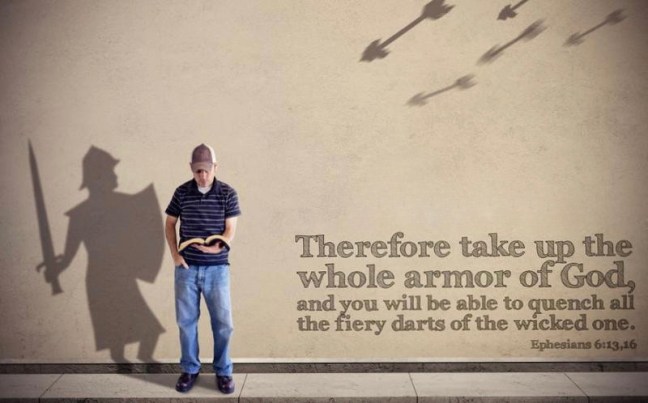
10 Finally, be strong in the Lord and in the strength of His might. 11 Put on the full armor of God, so that you will be able to stand firm against the schemes of the devil. 12 For our struggle is not against flesh and blood, but against the rulers, against the powers, against the world forces of this darkness, against the spiritual forces of wickedness in the heavenly places13 Therefore, take up the full armor of God, so that you will be able to resist in the evil day, and having done everything, to stand firm.

10終わりに言います。主にあって、その大能の力によって強められなさい。11悪魔の策略に対して 立ち向かうことが できるために、神のすべての 武具を身に着けなさい。12私たちの格闘は 血肉に対するものではなく、 主権、力、この暗やみの 世界の 支配者たち、また、天にいるもろもろの悪霊に 対するものです。13ですから、邪悪な日に 際して 対抗できるように、また、いっさいを成し遂げて、堅く立つことができるように、神のすべての 武具を とりなさい。

God has provided special Armor to resist the devil.

  • Belt of Truth  真理の帯   Jesus is truth
  • Breastplate of Righteousness 正義の胸当て    
  • Sandals of the Gospel of Peace 平和の福音の備えーはきもの
  • Shield of Faith 信仰の大盾
  • Helmet of Salvation 救いのかぶと
  • Sword of the Spirit – Word 御霊の与える剣 ー御言葉
  • Prayer 祈り

Satan will try to distract us and have us fight one another. The real enemy, the devil, is lying, deceiving, instigating, and promoting fear and hate. The “fruits” of his labor can be seen by his fingerprints: “Steal, Kill, and Destroy” (John 10). Look around us and we see looting, rioting, and destruction. We do not need to live in fear or hate. In appropriating the armor that God provided us, we will be able to discern the truth, extinguish the lies and accusations, and stand firm in Jesus and the promises of God. Let us love one another, filled with grace and truth. Let us share the Gospel so that people can be reconciled to God through Jesus. Let us forgive one another. In the end, Jesus wins. He is our only hope and solution in the midst of all this chaos and darkness. Therefore, Be strong in the Lord and in the strength of His might.   To God be the glory!

(the above is a summary of the message shared by Richard Nakamura during our JCC Zoom Worship time on August 23, 2020).

A Tough Text…

Matthew 15:21-28

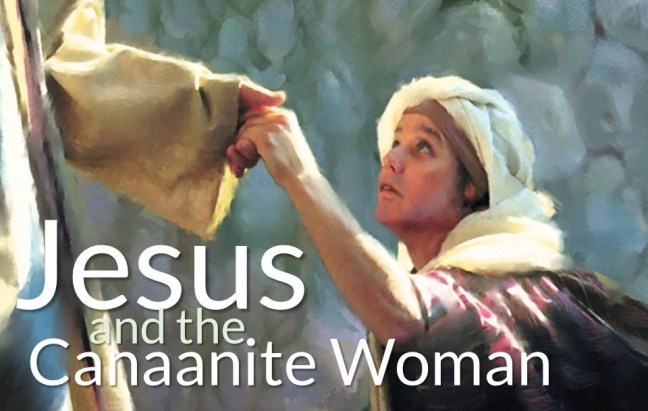
Leaving that place, Jesus withdrew to the region of Tyre and Sidon. A Canaanite woman from that vicinity came to him, crying out, “Lord, Son of David, have mercy on me! My daughter is suffering terribly from demon-possession.” Jesus did not answer a word. So his disciples came to him and urged him, “Send her away, for she keeps crying out after us.” He answered, “I was sent only to the lost sheep of Israel.” The woman came and knelt before him. “Lord, help me!” she said. He replied, “It is not right to take the children’s bread and toss it to their dogs.” “Yes, Lord,” she said, “but even the dogs eat the crumbs that fall from their masters’ table.” Then Jesus answered, “Woman, you have great faith! Your request is granted.” And her daughter was healed from that very hour.

 This has always been a problem text for believers. The disciples of Jesus are rude, racist, and impatient. Worse still, Jesus himself seems cold and unkind to put it mildly.

  • One traditional interpretation is that Jesus was simply testing her. He didn’t really mean those cruel things that he said to the Canaanite woman. He was drawing the disciples, crowd, and woman along to a teaching moment.
  • Another view is that Jesus – as fully God and sinless, was also fully human and part of his environment, context, and history – and therefore displaying blindspots similar to all Jewish men and rabbis that may have lived in that period. His meeting and conversation with the Canaanite woman change Jesus, allowing him to grow in his own understanding of his mission and role – not just as minister to the lost sheep of Israel but indeed to all people. He is challenged by this outsider, woman, and gentile – to go deeper with his own words about “clean” and “unclean” which he had spoken to the Pharisees and crowd earlier in chapter 15 while still in the Jewish territory of Galilee.

In considering this last interpretation I was reminded of the often-used phrase “white privilege” and its implications. While it’s not a sin to be one who has white skin (who can choose that?), it may be a sin to continue to deny, defend, or ignore the obvious implications of often being at a great advantage to one whose skin is of color. In the same way, can we see Jesus as representing a male of his historic context – while still “growing in his faith and obedience”? (see Hebrews 5:7-10)

My intent is not to attempt to solve this issue. Regardless of which way you understand Jesus in his deity and humanity, or choose to deal with this difficult conversation he had with the Canaanite woman, I think it’s clear that certain things can be learned from this text:

  • Jesus and the disciples had crossed over from Galilee (Jewish territory) into Tyre and Sidon (Gentile territory). They were NOT in their usual element. They were outside their comfort zones.
  • The gospel that made sense in Israel (vs. 1-20) now had to make sense in Syria. Jesus had just taught that one didn’t become unclean from not following Jewish rules – but from what comes out of the mouth and heart. Was the Canaanite woman “unclean”, a nuisance, unimportant, because she wasn’t Jewish? Is she really a dog just because she was born in Tyre??
  • When we look at the book of Acts we see the early church growing as it crosses cultural barriers – Hellenistic vs. Hebrew widows (chapter 6), Philip and the Ethiopian (chapter 8), Peter and Cornelius (chapter 10), Paul and his ministry to the Gentiles (throughout)… Could this be the real pattern and context for kingdom growth?
  • Is it possible that we, too, change when we interact with people who are NOT like us – different language, a different religion, different culture. The gospel tends to flow and strengthen when these boundaries between “us and them” begin to disappear. Either the gospel is good for all of us, or it’s not much good for any of us. Can we really trust the power of the gospel to save all? Are we able to change and adjust our own understanding in order for this to happen?
  • When Jesus was confronted by this foreign woman – he evidently changed, praising her faith, and healing her daughter. Should we not do the same?

(the above is a summary of the message shared during our JCC Zoom Worship session on Sunday, August 16th…)

God’ Love

Jonah 4:1-11 / ヨナ4:1−11

The last time we visited Jonah, he had been thrown overboard during a terrible storm and the Lord saved him by sending a large fish to swallow him. Chapters 2 and 3 tell us that Jonah was spat back out on a beach, and sometime later, God called out to Jonah again, to go to Nineveh and proclaim God’s message. Apparently, Jonah had learned his lesson, so this time, he goes to Nineveh

We’re not told what message God wanted Jonah to proclaim, but once in Nineveh, all Jonah said was, “Forty days more, and Nineveh shall be overthrown!” Kind of a strange message, since there was nothing about repentance or how they could avoid the disaster. It’s possible that since Jonah hated the Ninevites, he wanted to minimize the chance of them repenting and being spared.

However, to Jonah’s extreme displeasure, the people of Nineveh heard the message, repented of their ways, and reached out to God, asking for mercy. From the king, all the way to even the livestock, all wore sackcloth and fasted. The people prayed, even though they knew that it might have been too late for God to spare them. Even worse, from Jonah’s perspective, God saw all this and decided to spare them.

So in chapter 4, we find Jonah pouring out his anger to God. Jonah said that he knew that if he preached in Nineveh, they might repent and that God would not destroy them, and that’s the reason why he went in the opposite direction when God commanded him the first time to go to Nineveh.   Jonah can’t comprehend that God might spare the wicked people who are outside of His love and the Law, to endanger the future of God’s chosen people, Israel. Jonah is so angry and confused that he asks God to kill him, but God spares him.

Jonah then goes out of the city to wait to see what would happen when the forty days were past, probably hoping against hope that the people will revert back to their wicked ways and get destroyed after all.

God causes a plant to grow and give shade to Jonah, and Jonah loves it – The plant made him very happy. But then God sends a worm and hot east wind that kills the plant, and once again, Jonah is angry enough to die. At this stage, Jonah cares more about the life of a plant than the lives of 120,000 people.

God’s lesson for Jonah is clear – if Jonah cares about a plant that he didn’t even plant, how could God not care for human lives (and animals) who were going to perish, if they kept going the way they were going?

For us Christians, it’s easy to think that as we mature in our faith and become more obedient to the Holy Spirit’s guidance, that God is more pleased with us. And when we see people who openly are defiant towards God, and learn about their wickedness and depravity, we can’t help but think that God is really displeased with them. From these kinds of thoughts, it’s a short hop to believe that God loves those who love him and hates those who hate Him. And in turn, we find ourselves loving those who love God and hating those who hate God.

That’s where Jonah was – he hated the people of Nineveh because he considered them enemies of God. Jonah wanted to see them destroyed, and even felt more sympathy towards a plant than he did towards the Ninevites. But through this experience, God made it clear to Jonah that although He hated the people’s sins, he loved the people – He was ready to destroy them if He had to, but more than that, He cared about them and wanted the best for them.

This world has turned into a very “us versus them” place. I see people being “unfriended” over differences in which politicians they love or hate, whether to wear masks or not, whether sports teams and military bases should be renamed or not, etc.

Most likely, we too have strong feelings about some or all of these things, and we equally have strong emotions about people who we agree with or disagree with on these matters. But before we “unfriend” them, or say/write unkind things about them, we should realize that God loves them. In fact, that person or organization that you consider as the #1 enemy of God – God actually loves them just as much as He loves us. God didn’t send His only begotten Son to the cross just for those people who were going to love God back. It is also clear from our Lord’s teachings that even towards the people we hate, God expects us to treat them with love – “Love your enemies”.

I am confident that after these things happened, Jonah became a better prophet of God, understanding that even the people he hates, God loves. In today’s environment, it is also important for us to learn this lesson, so that we can be more effective Kingdom workers.


An Invitation to the Miraculous

Matthew 14:13-21 / マタイ14:13−21

Our text for this morning is the well-known story of Jesus miraculously feeding the 5,000. It’s the only miracle account that appears in all 4 gospels.

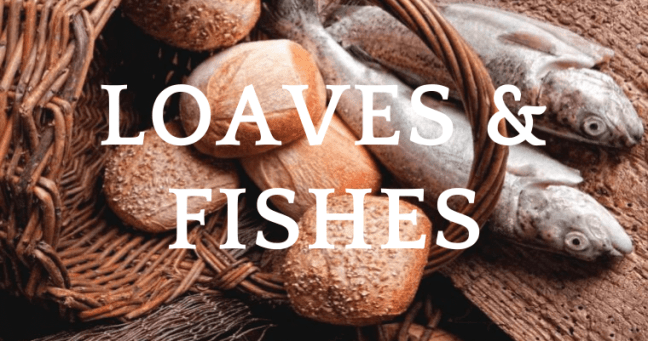
As our reading begins, Herod has just killed John the Baptist and Jesus has just heard this tragic news. He retreats to a quiet place… but the crowds follow him and find him. Jesus looks on the crowds and seeing their great need – he feels compassion for them – and spends the day healing many of them. As evening approaches the disciples come to Jesus and say “the people are hungry, it’s late, send them home so they can buy something to eat.”  Jesus says to them “there’s no need to send them home. You give them something.” The disciples reply that “we have only 5 loaves of bread and 2 fish.” Jesus then says: “bring them to me.” He then tells the people to sit down, looks toward heaven, gives thanks, breaks the bread, and distributes the food to the disciples who then give it to the people. All eat and are filled – with 12 baskets left over.

What interests me the most today is the unusual position in which Jesus seems to put the disciples. They are afforded an opportunity to participate in a great miracle – as well as seemingly put in a place of great difficulty. While Jesus could have fed the crowds without their help, he chooses to involve them – “You give them something.” For the disciples, the situation seems hopeless. Too many people, no food, no resources of their own. Yet Jesus invites them to bring the small items that they DO have – 5 loaves and 2 fish. In the end, it is of course the power of God that brings about the miracle of bounty – food for everyone! Yet, it requires risk and faith on the part of the disciples to bring (redistribute) the limited resources that they do possess.

Isn’t this what happens to us everyday?  We see the world’s needs all around us – in our community, city, state, nation, and world – and we tend to feel hopeless in the face of it all. The problems are too large. How can we make a difference at all?

And yet, Jesus invites us every day to bring the small items that we have – our money, our time, our abilities, our commitment to prayer, etc. – to offer them to him. It’s God’s job to multiply and bless the offerings – but it’s our job to bring our small resources to God – and believe that it matters.

Jesus invites us daily to participate in the miracle of God’s provision for others.

But it’s scary and risky. Will there be enough for us? Will WE be OK if we sacrificially give? Can we count on Jesus to supply the needs of our neighbors…. as well as ourselves? This account in Matthew not only seems to encourage a resounding “YES” to that question but even indicates that it may be the ONLY way that the crowds’ needs will be met. What items do YOU have to redistribute today? What are the loaves and fish that you wish to offer the Master?

(the above is a summary of the message shared during our JCC ZOOM worship session on August 2, 2020.)


Poetry by Jon Honeycutt

(Here are a few examples of Jon’s poetry which were recently sent to me and JCC – Pastor Tim)

***************

Pink-Plumeria-450w_large

It isn’t that odd, since it cometh from God

That the blossom gives fragrance to all

Knowing not what it does, it is only because

It’s obeying its clarion call


***************


istock_illustration_literary_art

Let not the question make you stumble

For we were made to understand

Accept the promise and be humble

For the answer is in God’s command –


***************


A warrior-poet must live in meoriginal

To pen such livid poetry

And fan creative urge to flame

To let it out means more of the same


***************


Thanking God we are not in His passions alonemagic-book-with-magic-lights-vector-id1060895936

But alive in the doing, the truth becomes known

And may He, in His wisdom grow seeds we have sown

May our highest intentions ally with His own


***************


Shall I listen, and it, understandpoetry-image

Or shall I speak and be confused

If I reject my Lord’s command

I’ll be unflatteringly used


***************


You can read it in the Biblepoetry_by_women_SQ

E’en though you didn’t hear it here

And if it’s true, then we are liable

To face the former foe we fear


***************

Sometimes I can feel God smiling on me

Awash in a wave from within to without

I feel it now as I sit by the sea

And I gaze in amazement about

It’s a tangible tamer of troubles and times

That I hold in my heart as I survey the shore

A moment of grace giving rise to the rhymes

And I know in my soul what I wandered here for

In this vision of calm, like a hand in my hand

As alone, yet not lonely, this splendor appears

And of how many others have sat on this sand

Where one’s thinking and actions and vision clears

It would be nice to share such a treasure as this

But with no one around to distract from the still

Like an opening flower or a lingering kiss

That awaken the memories wrapped in my will

harris31

***************

God bless you all and JCC

Your friend and fellow servant of our Lord and Savior Christ Jesus

Jon Honeycutt


Census 2020: 10 Questions ~ 10 Minutes ~ 10 Years of Impact!

Because_everyone_counts_in_GOD_s_eyes_

As Christians, we believe that all people are made in the image of God. Participating in the 2020 Census helps all of us have equal access to representation and resources. The census determines how many books and computers our schools can afford, whether our elders have access to heath care, and where bus routes are located.

You can choose any one of the three following ways to complete your census questionnaire before a census-taker comes to your door:

  1. Online at 2020census.gov A letter from the Census provides a personalized ID code to participate, but you can also just enter your address instead.
  2. By phone: Call 844-330-2020 for English or 844-460-2020 for Japanese. Phone completion is also available in 12 other languages or TDD. Phone numbers are here: https://2020census.gov/en/ways-to-respond/responding-by-phone.html
  3. By mail. Some people will get a census form in the mail to complete by hand. If you haven’t responded online or by phone, you will also receive a form in the mail.

You should not be asked to fill out a census form by email, and you will never be asked by the Census Bureau to provide your social security number, bank account numbers, or other private security information. There is no citizenship question on the census. The results cannot go to law enforcement, ICE, or your landlord. It is safe and secure.

Information provided by:

Elizabeth Dickinson
FAN Census Equity Outreach
206-498-4654

FAITH ACTION NETWORK

www.fanwa.org

The Parable of the Weeds

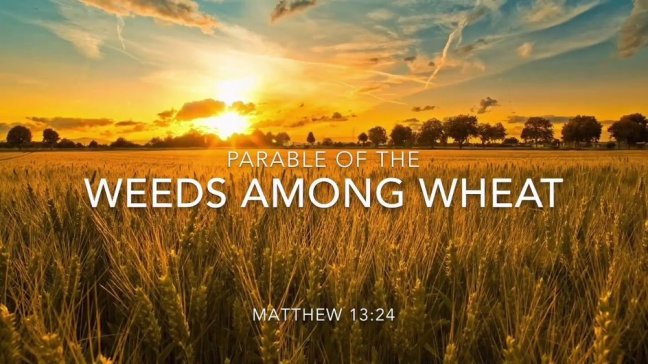
In Matthew chapter 13 Jesus tells a parable about a man who sowed good seed in his field. While everyone was sleeping, his enemy came and sowed weeds among the wheat. When the wheat later appeared… so did the weeds, causing consternation among the man’s servants. “Didn’t you sow good seed in the field?” they asked. “Where did the weeds come from?” “An enemy did this” the man replied. “Should we pull out the weeds?” they ask. “No” replies the man. “While you’re busy pulling up the weeds you could end up pulling out or damaging the good wheat along with them. Wait until the harvest and then I’ll have my workers collect the weeds first and burn them. Then it will be easier to harvest the wheat and store it in my barn.”

Later, Jesus’ disciples specifically ask him to explain the meaning of the parable – and he does, in verses 37-39.

“The one who sowed the good seed is the Son of Man. The field is the world, and the good seed stands for the children of the kingdom. The weeds are the sons of the evil one, and the enemy who sows them is the devil. The harvest is the end of the age, and the harvesters are angels.”

Even with this explanation from Jesus, it can be tricky to tease out the main theme that Jesus wishes to share with his disciples…. and us. At the very least, the following seem clear:

  • Evil is real. Jesus’ statement that “an enemy did this” makes clear that the weeds were not simply from natural causes or poor luck. Whether we interpret the evil as sin from within each of us (i.e., Paul’s struggle at the end of Romans chapter 7), systemic evil that takes root in our societies and institutions (e.g., racism and discrimination), or Satan and the evil in the spirit world that he controls – evil is real and cannot be treated lightly or ignored.
  • For now, evil and good (weeds and good wheat) will exist together. Attempts to “root out” evil should be handled with great care because,
    • in early stages, it’s not always easy to tell which plant is good and which is bad
    • in early stages, pulling out weeds may produce damage to the good plants
    • it would be best to wait until harvest, when things will be clearer… and the professional harvesters will be able to take care of the problem easily.

So let’s assume from Jesus’ explanation that the field is the world and that we are called to be good seed in that field. Our main task would be to simply grow mature and strong, trusting the owner of the field (God) to protect us from the weeds and other problems until the time of harvest.

Or, perhaps, we could change the metaphor a bit and think of ourselves as the servants. Although as Christians we would love to “pull up all those nasty weeds” and purify the field, we are being reminded that the field is God’s – not ours – and that we have limited ability to even discern the good from the bad, much less to actually eradicate the bad without doing great damage. Yes, weeding and harvesting are the work of God.

A brief look back at history would confirm the number of times that Christianity – as an institution or as individuals – have zealously attempted to “root out evil” and “purify” the field – only to do great damage to the cause of the gospel and create more trouble than when they started. Are we perhaps in such a situation today…. where the word “Christian” or “Evangelical” in the public media elicits not an impression of love and kindness – but one of anger, impatience, intolerance and just general grumpiness with the culture around them? Yes, it’s not always fun to be grouped in with “this set of people”… but have Christians in a very real sense earned this reputation?

So, given that evil is real…. and that we must proceed with caution when it comes to judging and weeding …. how should we then live? How can we fight boldly and bravely for justice while refusing to play God?

No simple answers are available – even from this parable – but perhaps keeping our eyes on the example of our Master will help us. Humility, Servanthood, and the constant act of Blessing others will be the necessary posture to maintain. This will allow our message of seeking justice – and standing up against evil when necessary – to be heard by the world around us.

(this is a summary of the message shared on July 19th during our ZOOM worship session.)

Fleeing from the Presence of the Lord

Jonah 1:1-17 /  ヨナ1:1−17

This story takes place after the united kingdom of Israel has divided into two (the southern kingdom became Judah which kept Jerusalem as its capital, and the northern kingdom retained the name Israel and made Samaria its capital), after Solomon’s death. According to 2 Kings 14:25, Jonah was a prophet that served the northern kingdom around 786-746 B.C.   He was from a town called Gath-Hepher, just to the west of Sea of Galilee.

Although Jesus was asked many times for a sign that He was the Messiah, the only sign He would allude to was Jonah. An interesting side note is that Gath-Hepher was located very close to Nazareth, where Jesus grew up.

God took note of the great wickedness of the people of Nineveh, the capital city of Assyria, and commands Jonah to go there immediately and speak out against them. However, instead of following orders, Jonah heads toward Joppa, which is in the opposite direction. He intends to go to Tarshish, which was in Spain, in an attempt to run away from the presence of God.

Jonah definitely is not acting as someone who is in the service of the Lord. Not only does he not obey God’s orders, he is not acting as an ambassador of God’s love. Although he knows that God brought on the supernaturally strong storm out on the sea, he does nothing to try to help those on board. While the sailors are valiantly trying to save the ship by praying to their gods and physically doing all they can, Jonah is sleeping down below. When God made it clear to everyone that the reason for the storm was Jonah’s disobedience, Jonah doesn’t even offer to pray to God, nor to repent. Jonah is more ready to die than to obey God’s orders, at the risk of the lives of everyone else on board. Not a great witness for the Lord.

The sailors realize how powerful Jonah’s God is and realize that there is nothing they can do to save themselves except to appease this God of heaven who made the sea and the dry land. They are horrified that Jonah had brought on God’s displeasure by disobeying such a powerful God. They ask Jonah what needs to be done, and Jonah tells them that they must throw him overboard. The sailors are not willing to do that, so they continue to try to guide the ship to safety, but when they are convinced that there is no other way to save the ship than to throw Jonah overboard, they reluctantly do, but only after praying to God.

So why was Jonah disobeying God? Was it because he was afraid that God would destroy Nineveh and all the people living there? Was he acting out of love and concern like Abraham did, when Abraham was told that God was going to destroy Sodom and Gomorrah? It ends up being the opposite. In chapter 4 of Jonah, Jonah reveals why he disobeyed God. It was because he was afraid that the people of Nineveh would repent and that God would spare them. Jonah would rather that God destroyed Nineveh. He wanted nothing to do with God if He was going to spare Nineveh

To understand where Jonah was coming from, we have to realize that Assyria was an emerging great power in the region, and they were on an expansion plan. They were violent people who would invade countries and scatter the conquered people and have them intermingle so that they would lose their national and cultural identity. In fact, a few decades from when this story takes place, in 722 B.C., Assyria does conquer Israel and destroys it as a nation. They almost succeeded in conquering Jerusalem and Judah, but the southern kingdom was spared for the time being. As a result, the people of God got intermingled with other people and from the eyes of the Chosen People, they became impure and their religion also diverged away from the worship of the true God. That’s why by the time of Jesus, Samaritans were so hated by the Jews.

So from Jonah’s perspective, Nineveh was a danger to God’s people and to the worship of God. Although Israel and Judah had their faults and disobeyed God often throughout their history, they were the Chosen Ones, and they had a special relationship with God. They were loved by God in a special way. So it made no sense to Jonah that God would show love to such godless and wicked people who would end up destroying Israel.

Unbeknownst to the sailors who probably assumed that Jonah drowned, God saves Jonah and we know in chapter 3 that God gives him another chance to obey, and Jonah obeys, albeit reluctantly.

So is it possible to run away from the presence of the Lord? Since God is omniscient and omnipresent, we can safely conclude that no, it is not possible to run away from God. Jonah tried, but was not successful.

Psalm 139:7-10 7Where can I go from your spirit?  Or where can I flee from your presence? 8If I ascend to heaven, you are there; if I make my bed in Sheol, you are there. 9If I take the wings of the morning and settle at the farthest limits of the sea, 10even there your hand shall lead me, and your right hand shall hold me fast.

But is it a bad thing that we cannot run away from God? It might feel that way when we are planning to disobey God, and that He keeps pursuing us and will not leave us alone. However, this is because He loves us and wants us to repent and obey His commands. God created us to do His good works, and He will not allow us truly to be satisfied unless we are doing so.

When we are in need of help, it is a great comfort that the presence of God is there, no matter what. So it is a good thing that we cannot avoid being in the presence of our God.

In Jonah chapter 2 it tells us how uncomfortable it was for Jonah to be sinking to the depth of the sea and drowning, and how glad he was when God saved him. Let us strive to be obedient to God’s commands, even if we are not fully in agreement with them, lest we find ourselves thrown overboard and be reminded that we cannot escape God.

(the above is a summary of the message shared by Shun Takano on July 12th via our JCC ZOOM worship time.)

Come To Me…

“Come to me, all you who are weary and burdened, and I will give you rest. Take my yoke upon you and learn from me, for I am gentle and humble in heart, and you will find rest for your souls. For my yoke is easy and my burden is light.”  Matthew 11: 28-30

「すべて、疲れた人、重荷を負っている人は、わたしのところに来なさい。わたしがあなたがたを休ませてあげます。わたしは心優しく、へりくだっているから、あなたがたもわたしのくびきを負って、わたしから学びなさい。そうすればたましいに安らぎが来ます。 わたしのくびきは負いやすく、わたしの荷は軽いからです。」マタイ11:28−30

Today’s text is the well-known and well-loved invitation of Jesus: “Come to me, all you who are weary and burdened.” Are there any among us who haven’t felt that way at times? A kind of bone-weariness, tiredness, helplessness….it’s possible that you’re feeling that way today.

But along with the rest that Jesus offers in verse 28 – he appears to offer us work and a burden as well, when he says: “Take my yoke upon you”, and later when he says “my burden is light.” What does Jesus mean by this?

While there are many ways to view this text, the image of the yoke itself seems to give us insight to the meaning of Jesus’ words.

  • The yoke that is talked about here is a double yoke. It is designed for two animals. Some labor is too difficult for one animal to do alone, but a yoke provides a way to combine the strength of two animals.
  • When two animals were connected by a yoke, they were never the same. One of the animals was more experienced and the other was often younger and less experienced. Thus, during the work – whether it be plowing a field, or turning a millstone, etc. – the younger and less experienced could be guided and helped by the older and more experienced. This is always true, whether it’s a team of horses or a team of huskies for a dogsled. Jesus’ words to “learn of me” would point to this kind of relationship in which Jesus teaches and guides us through example.
  • When Jesus gave his invitation to “Come to me if you’re weary” he meant “Are you tired of trying to live your life on your own? Are you tired of struggling with such a difficult task?”
  • When he said “take my yoke” – he wasn’t offering a new burden to us – he was inviting us to come into his yoke so that we could work together. This is basic faith and discipleship in the Christian faith – it describes a relationship with Jesus Christ. We are being invited into a life and work relationship with Christ.
  • When we live our life with Christ – letting Christ guide us and lead us – i.e., walking and working together in the same yoke – we find that the result is much different than when we were trying to do it all on our own – more efficient… less stress…. a lighter burden!

Won’t you accept Jesus’ invitation to join him in his yoke – to enter into a relationship with Christ?

There is a warning here – the invitation is only to those who are weary and heavy-laden with burdens. Many in Jesus’ time saw his miracles and heard his teaching but refused to believe, feeling that they had a better answer. If you feel proud and sure that you can do it on your own – then of course this invitation makes no sense.

But if you’re at the end of your rope – exhausted and tired – then now is the time to accept this beautiful invitation and promise. Come!

(this is a summary of the message shared via our ZOOM worship time on Sunday, July 5th)